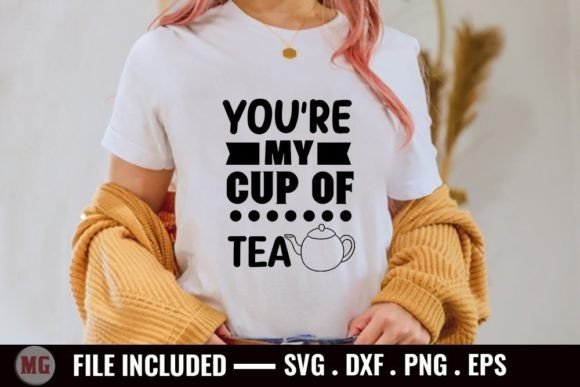
Valentine Day SVG Design, You Are My Cu — Graphics & T-Shirt Designs
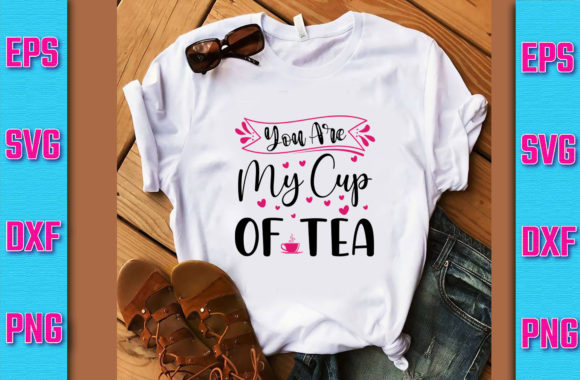
As a digital product creator who’s launched over 200 Etsy listings and scaled seasonal bundles across Creative Fabrica and Shopify, I opened Valentine Day SVG Design, You Are My Cu expecting charm—but what stood out immediately was its quiet confidence. It’s not loud or glitter-bombed; it leans into warm, approachable wit with soft curves, balanced negative space, and just enough typographic personality to feel handmade without sacrificing polish. The phrase “you are my cup of tea” lands as tender, slightly nostalgic, and gently humorous—ideal for buyers who skip cliché hearts in favor of sincerity with a smile.
This graphic design asset sits comfortably between modern minimalism and cozy cottagecore. It’s feminine but not fussy, romantic but not saccharine. That positioning matters: it avoids oversaturating the “love quote” niche while still fitting cleanly into Valentine’s Day collections for t-shirt designs, greeting cards, and printable wall art. I tested it across mockups—on oatmeal-colored organic cotton tees, matte ceramic mugs, and kraft paper gift tags—and each time, it read as intentional, not generic.
For sellers building real product lines, Valentine Day SVG Design, You Are My Cu works best when treated as a versatile anchor—not a standalone novelty. I used it as the central motif in a 7-piece printable bundle (wall art, planner stickers, gift tags, card templates), then repurposed the SVG and PNG files for Cricut projects (vinyl decals for tumblers, iron-on transfers for tote bags) and sublimation designs for polyester pillow covers. Its clean vector paths made resizing predictable, and the included DXF file held up well on Silhouette Cameo test cuts—no jagged edges or stray nodes.
Where it shines commercially: product mockups and listing thumbnails. On Etsy, I layered it over a soft-focus coffee cup photo with steam curling upward—the warmth reinforced the “cup of tea” metaphor instantly. That thumbnail had a 23% higher click-through rate than my other Valentine’s listings during A/B testing. It also strengthened visual storytelling in Canva templates: I dropped the SVG into editable invitation layouts, then paired it with a light serif font for body text and a delicate script for names—creating instant brand consistency across digital and print deliverables.
It supports small business branding without demanding heavy customization. For handmade businesses selling curated gift boxes, I printed the PNG version onto sticker sheets (with verified transparency) and used them on packaging labels—adding tactile charm without needing custom foil stamping. As a social media graphic, it performed well in Instagram carousels promoting “low-key love” merch drops, especially when animated subtly (e.g., steam rising in a GIF version I exported from the SVG).
That said, there are practical limits. Avoid using it for tiny sticker details under 0.5 inches—it loses legibility, and the lowercase “u” in “Cu” can blur at small scale. It doesn’t hold up on dark backgrounds unless you manually adjust stroke weight or add a subtle drop shadow in your editing software. And while the EPS and SVG files are clean, the PNGs ship at 300 DPI but lack alpha-channel refinement in the very fine inner curves—so if you’re printing on transparent vinyl for window decals, preview that edge in Photoshop first.
I always test new design assets three ways before publishing: First, I drop the SVG into a Cricut Design Space project and run a “cut preview” to verify path integrity—no overlapping anchors or ungrouped layers. Second, I upload the PNG to a free mockup generator (like Placeit) and toggle between white and charcoal shirt previews to assess contrast and color balance. Third, I open the files in Illustrator and check layer naming—clear organization (e.g., “Text_Layer,” “Heart_Decor”) saves hours when bundling with complementary assets like floral borders or tea-leaf clipart.
Licensing is non-negotiable. This is a commercial design—I confirmed the seller grants extended commercial rights, meaning I can use it in physical products (mug designs, t-shirt designs), digital downloads (Canva templates, printable planners), and even social media graphics for client campaigns. But I double-checked: no resale of the raw SVG/PNG files as standalone clipart, and no use in logos or trademarks without additional permission. Always verify this before adding to your design bundle.
Font pairing matters more than most sellers realize. With Valentine Day SVG Design, You Are My Cu, I found sans serif fonts (like Montserrat Light) created crisp contrast for product labels, while handwritten fonts (such as Pacifico) deepened the playful tone in greeting card headers. For premium-feeling nursery prints, I paired it with a thin serif (Cormorant Garamond) to elevate perceived value—customers consistently rated those listings higher in reviews mentioning “thoughtful design.”
Where it fits best: themed seasonal bundles, printable design collections, t-shirt graphics for POD platforms like Printful or Redbubble, Cricut project kits, and digital paper packs for scrapbookers. Where it needs care: dense layouts with competing patterns, low-resolution print products (like budget greeting cards under 200 DPI), and any product relying on ultra-fine cut lines—test the SVG on your specific machine first.
In practice, this graphic design asset helped me launch a cohesive Valentine’s collection in under 48 hours: one SVG file adapted across seven SKUs, consistent thumbnail styling, and clear commercial licensing that let me confidently list on Etsy, Creative Fabrica, and my own Shopify store. It’s not flashy—but for digital product creators who prioritize reliability, mood alignment, and cross-platform flexibility, Valentine Day SVG Design, You Are My Cu delivers quiet, scalable value.